A June 16 meeting between Norway and Iraq at the 2026 FIFA World Cup would be a compelling contrast in styles: Norway’s modern European talent pipeline and elite star power against Iraq’s proud football culture and tournament-tested resilience. While nothing in international football is guaranteed, there are clear, benefit-driven reasons many analysts would expect Norway to be favored in this matchup.
This preview breaks down the most persuasive factors behind that expectation, focusing on what Norway tends to do well, where Iraq can shine, and what match dynamics could push the game in Norway’s direction.
Why “favored” matters: it’s about probabilities, not certainties
When a team is “favored,” it usually reflects a blend of measurable indicators: player quality, squad depth, historical performance at top levels, tactical trends, and how reliably a team can create (and limit) high-quality chances. It does not mean the underdog cannot win. It means the favorite is seen as more likely to win across many simulations of the same game.
In a potential Norway vs Iraq World Cup match on June 16, Norway’s edge is most often tied to the strength of its top-end talent and the environment its players compete in week to week.
1) Elite star power that changes games
At the highest level, matches are frequently decided by players who can produce goals from moments that do not look dangerous. Norway’s biggest advantage is that it has produced world-class attacking talent capable of doing exactly that.
Norway’s “difference makers” effect
Norway’s modern golden generation is headlined by players who have consistently performed in major European leagues and competitions. For example:
- Erling Haaland is widely recognized as one of the premier center forwards of his era, with a scoring profile built on movement, power, and elite finishing.
- Martin Ødegaard has established himself as a top-level creative midfielder, offering chance creation, pressing intelligence, and control in possession.
For a single World Cup group match, this kind of top-end quality is a huge “multiplier.” It can turn a tight, tactical contest into a result with just one sharp combination, one set-piece sequence, or one transition.
What this means on June 16
If Norway can keep the game within reach of its best attackers (through stable buildup and field position), it gains a practical advantage: it does not need many chances to score. That makes Norway particularly dangerous in matches where the opponent defends well.
2) A deeper pool from top European football environments
Beyond star names, favorites typically have more depth: more players accustomed to high-tempo matches, sharper tactical demands, and intense weekly competition. Norway’s squad profile often reflects the benefits of UEFA-based development and exposure.
Why depth matters in a World Cup group stage
- Rotation and energy: Group-stage schedules can be compact, and fresh legs matter.
- Specialist options: The ability to bring on a strong aerial threat, a defensive midfielder, or a pacey winger can change the match late.
- In-game problem solving: Teams with more “role-specific” players can adjust faster when Plan A stalls.
Norway’s overall talent pool in recent cycles has increasingly included players developed in professional academy structures and tested in tactically demanding systems. That tends to translate into more consistent execution, particularly under pressure.
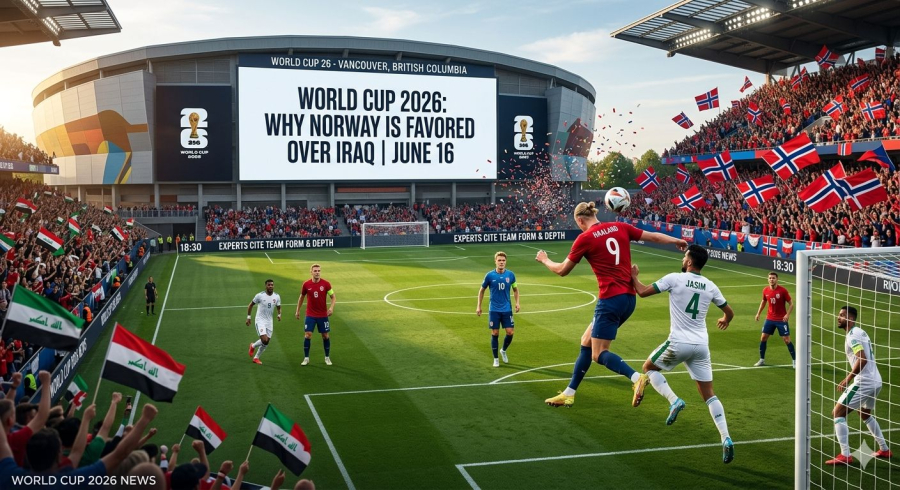
3) Tactical advantages: vertical threat, physicality, and set-piece potential
International football often rewards teams that can be effective in multiple phases: controlled possession, fast transitions, and dead-ball situations. Norway can check several of those boxes in a single match.
Vertical threat that forces difficult decisions
With a top-tier striker profile and creative midfield supply, Norway can threaten directly behind the defensive line. That forces opponents into a tough trade-off:
- Step up and press, risking space in behind, or
- Drop deeper, allowing Norway more time to circulate and pick passes.
Either choice can create openings, especially if Norway starts well and builds early momentum.
Physicality and aerial presence
Physical matchups matter in World Cup games. Norway has often benefited from strong athletic profiles, which can show up in:
- Defending crosses and second balls
- Attacking corners and wide free kicks
- Protecting leads with duel-winning and clearances
That doesn’t guarantee goals, but it increases the number of pathways to scoring and the ability to manage game states.
Set pieces as a “probability booster”
In group-stage matches, set pieces are a reliable source of goals. Norway’s height, timing, and delivery options can make dead-ball situations feel like mini-penalties: not automatic, but consistently threatening.
4) Match control: creating chances while limiting risk
Being favored is not only about scoring. It’s also about reducing the opponent’s best routes to goal. Norway’s upside in a June 16 matchup would likely include improved match control compared with many underdogs:
- Structured possession to keep the ball and lower the opponent’s volume of attacks
- Counter-pressing after losing the ball to prevent fast breaks
- Game management to slow the tempo when needed
When favorites win World Cup group matches, it’s often because they “shrink” the game: fewer chaotic moments, fewer open transitions, and fewer coin-flip sequences.
5) A style matchup that can favor Norway’s strengths
Iraq’s best performances historically have often featured intensity, unity, and strong emotional momentum. That can be a real weapon on the big stage. But against a team with Norway’s profile, Iraq may need to be nearly perfect in several areas simultaneously:
- Defensive compactness without conceding dangerous set pieces
- Disciplined pressing without leaving space behind
- Efficient finishing from limited chances
Norway’s advantage is that it can win in more than one way: a fast start, a set piece, a late surge, or a single moment of elite finishing.
Quick comparison: why Norway may be rated higher pre-match
| Factor | Norway (why it helps) | Iraq (where they can respond) |
|---|---|---|
| Top-end attacking threat | Game-changing finishing and chance creation can decide tight matches. | Compact defending and smart coverage can reduce high-quality looks. |
| Squad depth | More high-level options for late changes and rotation. | Strong team unity and roles can offset depth gaps. |
| Set-piece upside | Aerial profiles and delivery can create consistent scoring chances. | Organization and discipline can turn set pieces into a strength of resistance. |
| Match control | Ability to manage tempo and field position reduces upset volatility. | High energy and quick transitions can punish overcommitment. |
| Experience in elite leagues | Regular exposure to high-tempo, tactical systems improves execution. | International tournament mentality can elevate performance on the day. |
A positive look at Iraq’s upside (and why the match could still be close)
Even in a “favored vs underdog” setup, Iraq brings strengths that can make this contest competitive and exciting.
Proven ability to rise in tournament moments
Iraq’s historic 2007 AFC Asian Cup title remains one of international football’s most inspiring achievements, showing what can happen when belief, structure, and momentum align. That legacy matters because it reflects a culture capable of delivering under pressure.
Underdog advantage: freedom and intensity
Underdogs often benefit from simpler decision-making and full-commitment defending. If Iraq can keep the match level into the second half, pressure can shift toward the favorite, and one transition or set piece can flip the storyline.
Key “June 16” game indicators that would support Norway’s favorite status
If you’re previewing the match, these are the on-field signals that typically confirm Norway’s edge early:
- Norway winning second balls and sustaining attacks after clearances
- Consistent chance creation from wide areas and cutbacks, not just hopeful crosses
- Controlled transitions (few reckless turnovers in central zones)
- Set-piece pressure that forces Iraq into repeated defensive headers and clearances
- Clinical finishing on the first clear chance, which can open the game
When those elements are present, Norway’s pathway to three points becomes more direct and repeatable.
How Norway can turn favoritism into a win
Being favored is only valuable if it translates into the right match plan. Norway’s most productive blueprint usually includes:
- Start fast to avoid a low-block grind becoming a psychological test.
- Use Ødegaard-style creativity (a high-level playmaker profile) to create chances through the middle, not only from the wings.
- Attack set pieces with intent and vary deliveries to stay unpredictable.
- Stay patient: a 0–0 at halftime is not a failure if chance quality is building.
- Protect against counters by maintaining smart rest defense behind attacks.
This approach keeps the game in Norway’s comfort zone: controlled pressure, multiple scoring routes, and fewer “randomness” moments.
Bottom line: why Norway is favored over Iraq on June 16
If Norway and Iraq meet on June 16 at World Cup 2026, Norway would likely be favored because it combines elite, game-breaking attackers with a squad profile shaped by high-level European competition, plus multiple tactical avenues to score through open play and set pieces. That blend tends to raise a team’s baseline performance, which is exactly what “favorite” status reflects.
For fans, that’s a compelling promise: Norway has the tools to deliver a proactive, decisive performance. And for neutrals, it’s a match with genuine intrigue, because Iraq’s intensity and togetherness can keep the contest alive long enough for the World Cup’s magic to show up.
Frequently asked questions
Is a Norway vs Iraq match on June 16 officially confirmed?
This article is written as a matchup preview based on the scenario described. Official World Cup fixtures and qualified teams depend on tournament draws and qualification outcomes.
What usually decides matches like this at the World Cup?
Common deciding factors include set pieces, conversion rate on limited chances, transition control, and whether the favored team scores first.
What would be Iraq’s best path to an upset?
A disciplined defensive block, strong set-piece defending, and sharp counterattacking efficiency are classic underdog pathways—especially if the match stays level into the final 30 minutes.
