Norway’s FIFA World Cup story is a powerful example of how a football nation can turn moments of qualification into long-term momentum. While Norway’s men have appeared at the tournament only a handful of times, those appearances produced memorable performances, global headlines, and a lasting boost to the country’s football identity. On the women’s side, Norway built an even bigger World Cup legacy—one that includes lifting the trophy.
This is the history of Norway and the FIFA World Cup: the early debut, the long wait, the 1990s breakthrough years, and the women’s championship era that helped shape Norwegian football culture for generations.
Norway at the FIFA World Cup: A quick overview
Norway’s World Cup journey is often described in two tracks:
- The men’s national team: fewer tournament appearances, but a reputation for disciplined organization and a genuinely iconic win over Brazil in 1998.
- The women’s national team: one of the early global powerhouses, including World Cup champions in 1995.
Together, these stories created significant benefits for the sport at home—higher visibility, increased youth participation, and a stronger belief that Norwegian teams can compete with football’s traditional giants.
Norway men’s team World Cup history (FIFA World Cup)
1938: Norway’s World Cup debut and an immediate test
Norway’s first men’s World Cup appearance came in 1938, during an era when the tournament used a straight knockout format from the start. Norway faced a daunting opponent right away: Italy, who went on to win the competition.
Norway pushed the eventual champions hard, losing 2–1 after extra time. Even in defeat, the performance set an early tone: Norway could be competitive on football’s biggest stage.
The long wait: decades between appearances
After 1938, Norway endured a long stretch without World Cup qualification. That extended gap became part of the national narrative—fueling ambition, sharpening development priorities, and making the eventual return feel even more meaningful.
One positive outcome of this era was the steady strengthening of domestic structures and player pathways, laying groundwork that would pay off later.
1994: The return to the World Cup and instant competitiveness
Norway’s next men’s World Cup appearance arrived in 1994, ending a wait of more than half a century. The 1994 tournament proved immediately how fine the margins are at elite level.
Norway were placed into a famously tight group where every point mattered. They recorded:
- 0–0 draw vs Ireland
- 0–1 loss vs Italy
- 1–0 win vs Mexico
Despite earning 3 points, Norway did not advance—an outcome that underlined both the competitiveness of the group and the importance of goal difference in tournament football.
Even so, the 1994 qualification delivered a major benefit: it reintroduced Norway to a global audience and strengthened the belief that the nation could qualify again—and not just participate, but perform.
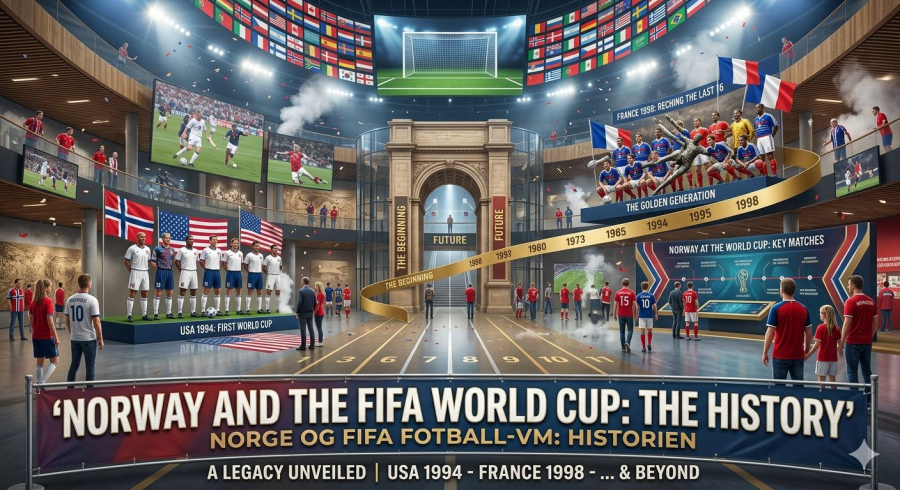
1998: Norway’s signature World Cup moment
Norway qualified again for 1998, confirming that 1994 was not a one-off. This tournament produced the defining men’s World Cup highlight in Norway’s modern history: the dramatic 2–1 win over Brazil in the group stage.
The result mattered for both performance and perception:
- Global credibility: beating Brazil is one of football’s most recognizable statements.
- Momentum: Norway advanced from the group, reinforcing a winning mindset.
- National pride: iconic moments become shared memories that grow the sport’s cultural footprint.
Norway progressed to the Round of 16, where they lost 1–0 to Italy. Even with the elimination, the 1998 campaign remains a benchmark: a tournament where Norway demonstrated resilience, organization, and the ability to deliver when the stakes were highest.
Men’s FIFA World Cup appearances: at a glance
| Year | Host country | Norway’s stage | Headline takeaway |
|---|---|---|---|
| 1938 | France | Round of 16 (knockout format) | Pushed eventual champions Italy to extra time (2–1) |
| 1994 | United States | Group stage | Highly competitive group; 1–0 win over Mexico |
| 1998 | France | Round of 16 | Famous 2–1 win over Brazil; advanced to knockout stage |
The 1990s “breakthrough era”: what powered Norway’s rise
Norway’s return to the World Cup in the 1990s wasn’t just luck—it reflected a period of clear identity and effective execution.
A recognizable playing identity
Norway became known for strong team structure, disciplined defending, and direct attacking play—an approach that can be especially effective in tournament settings where preparation time is short and efficiency matters.
Confidence on the international stage
During the 1990s, Norway achieved notable standing in world football, including reaching second place in the FIFA Men’s World Ranking during the decade. That kind of ranking peak is more than a statistic: it signals consistent results against high-level opponents and helps a team enter major tournaments with genuine belief.
Players who turned moments into memories
World Cups elevate players into household names. Across Norway’s modern World Cup period, a range of recognizable internationals helped shape the era, contributing to a stronger football profile for the country and inspiring new generations to take up the sport.
Norway women’s team World Cup history (FIFA Women’s World Cup)
If the men’s World Cup history is defined by selective, high-impact moments, the women’s story is defined by sustained excellence—especially in the early decades of the FIFA Women’s World Cup.
1995: Norway become world champions
Norway’s greatest World Cup achievement is unequivocal: FIFA Women’s World Cup winners in 1995. Winning the tournament positioned Norway among the sport’s elite and delivered lasting benefits:
- International prestige for Norwegian football
- Role-model power, helping normalize ambition for girls in sport
- Momentum for participation, coaching, and investment across the women’s game
That title remains a cornerstone of Norway’s sporting identity—proof that a nation with a clear plan, strong talent development, and a competitive mentality can reach the very top.
Ongoing tournament presence and high finishes
Norway have regularly been part of the Women’s World Cup conversation across multiple eras, including podium-level and deep-run finishes that reinforced their reputation as a top European program.
Women’s FIFA Women’s World Cup appearances: at a glance
| Year | Norway’s stage | Highlight |
|---|---|---|
| 1991 | Third place | Early tournament success and global statement |
| 1995 | Champions | World Cup winners |
| 1999 | Fourth place | Reached the semifinals |
| 2007 | Fourth place | Reached the semifinals |
| 2011 | Group stage | Qualified and competed on the world stage |
| 2015 | Round of 16 | Reached the knockout phase |
| 2019 | Quarterfinals | Among the last eight teams |
| 2023 | Group stage | World Cup participation in a highly competitive era |
Why the World Cup matters for Norway: lasting benefits beyond results
For a country with a relatively small population compared with many football superpowers, every World Cup moment carries outsized impact. Norway’s World Cup history demonstrates several long-term benefits that extend far beyond a single tournament:
- National visibility: World Cups amplify a country’s football brand instantly, attracting interest at home and abroad.
- Youth inspiration: iconic games (like the 1998 Brazil win) become entry points for young players and lifelong fans.
- Development focus: qualification cycles encourage improvements in coaching, scouting, sports science, and player pathways.
- Cultural momentum: shared tournament memories strengthen the sport’s place in the national identity.
Iconic Norway World Cup moments to remember
- 1938: Norway take eventual champions Italy to extra time in their debut appearance.
- 1994: Norway’s return after decades away—proving they could compete immediately.
- 1998: Norway defeat Brazil 2–1, one of the most celebrated results in national team history.
- 1995 (women): Norway win the FIFA Women’s World Cup, achieving the sport’s ultimate prize.
The takeaway: a World Cup legacy built on moments that last
Norway’s FIFA World Cup history shows how powerful major tournaments can be—even when appearances are limited. The men’s team has delivered high-impact performances, highlighted by a win that still resonates worldwide. The women’s team has reached the pinnacle, winning the World Cup and helping shape Norway’s identity as a serious football nation.
From 1938’s brave debut to the 1990s resurgence and the women’s championship legacy, Norway’s World Cup story is ultimately about aspiration rewarded—turning qualification into belief, belief into performance, and performance into enduring national pride.
