Norway’s modern football story is built on a simple, exciting truth: the country now produces elite, game-changing talent at both ends of the pitch. With world-class attacking power, a creative midfield conductor, and a growing pool of top-league professionals, the idea of Norway reaching the 2026 FIFA World Cup feels more realistic than it has in years.
This article breaks down the most credible player candidates for a 2026 squad and the kind of team plan that can convert individual brilliance into consistent results. Because international football can change quickly through form, injuries, and selection choices, the focus here is on what’s known and observable: roles, profiles, partnerships, and a blueprint that plays to Norway’s strengths.
Why 2026 is a genuine opportunity for Norway
Norway’s upside for 2026 comes from three big advantages that translate well to international tournaments and qualifying campaigns:
- A match-winning striker who can decide tight games with limited chances.
- A high-end creator in midfield who can control tempo and unlock compact defenses.
- Better depth than in previous cycles, especially in wide positions and across the back line, giving the team more ways to win different types of matches.
International football often rewards clarity: defined roles, repeatable patterns, and set-piece excellence. Norway has the personnel to build a direct, efficient approach without sacrificing creativity.
The core pillars: the stars the plan can be built around
Erling Haaland: the finishing edge that changes everything
If you’re designing a World Cup qualification plan, having a forward who can score from half-chances is a major advantage. Haaland’s strengths point to a very clear tactical benefit: Norway can be dangerous even when out-possessed.
What that enables in practice:
- Early delivery and aggressive box occupation: crosses, cut-backs, and quick passes into the area become high-value actions.
- Vertical transitions: Norway can defend compactly and still threaten immediately on the break.
- Set-piece pressure: corners and wide free kicks become genuine scoring phases, not just restarts.
Martin Ødegaard: the connector who raises the team’s ceiling
Norway’s most important step from “talented” to “tournament-ready” is making sure possession phases have purpose. Ødegaard’s value is not only chance creation; it’s the ability to link midfield to attack and provide control when games get tense.
Key benefits of building around Ødegaard:
- Structured chance creation through combinations, rotations, and well-timed through balls.
- Pressing triggers from the front, helping Norway win the ball in dangerous areas.
- Game management: slowing matches down when needed and sustaining pressure.
The supporting forwards: making Norway harder to predict
International defenses can commit extra attention to one superstar if the supporting cast doesn’t punish them. Norway’s attack becomes much more complete when multiple players can threaten the box, run in behind, and finish.
One of the clearest complements is Alexander Sørloth, whose profile can add physicality, hold-up play, and a second aerial target. In the modern international game, having an alternative striker option can win qualifying points on difficult nights.
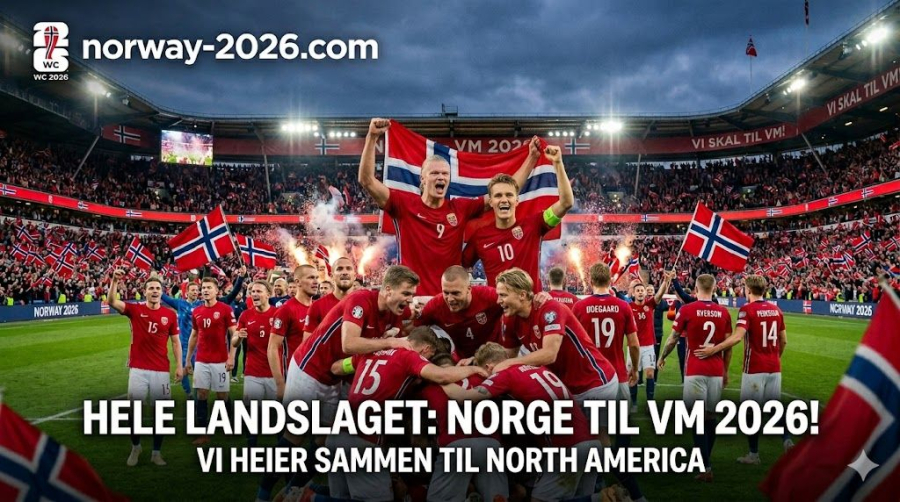
Projected 2026 squad candidates (by role)
Final tournament squads depend on form and fitness, but Norway’s likely 2026 picture can be understood through a shortlist of realistic candidates and the roles they can fill.
| Unit | Player candidates | What they bring |
|---|---|---|
| Strikers | Erling Haaland, Alexander Sørloth | Elite finishing, penalty-box dominance, hold-up option, aerial threat |
| Creative midfield | Martin Ødegaard | Chance creation, tempo control, final pass quality, leadership with the ball |
| Midfield engine | Sander Berge, Patrick Berg (as a profile), other central options in the pool | Ball progression, defensive coverage, physicality, shielding in transition |
| Wide attackers | Antonio Nusa, Oscar Bobb, Andreas Schjelderup (as a profile) | 1v1 threat, dribbling to break blocks, inverted runs, chance creation from wide areas |
| Fullbacks | Julian Ryerson (as a profile), other fullback options in the pool | Two-way running, pressing energy, overlapping support, defensive duel ability |
| Center backs | Kristoffer Ajer and other central defenders in the pool | Aerial defending, recovery runs, building out under pressure |
| Goalkeepers | Norway’s goalkeeper pool (varies by form and selection) | Shot-stopping, command of area, distribution under pressure |
Note: The names above are presented as candidates and profiles rather than guarantees. The most important takeaway is the shape of the squad: Norway can field a top-level striker, a top-level creator, and increasingly dynamic wide options.
Norway’s best tactical blueprint for 2026
The most persuasive plan for Norway is not to imitate possession-heavy superpowers. It’s to maximize what wins international matches: efficiency, compactness, and decisive moments.
1) A flexible base shape: 4-3-3 and 4-2-3-1 as twin identities
Norway’s player pool naturally fits two closely related systems:
- 4-3-3 for balance: three midfielders to cover transitions, wingers to stretch the pitch, and a clear central striker reference point.
- 4-2-3-1 for control and connection: a double pivot to protect the back line and free Ødegaard as a central creator behind the striker.
The advantage of training both is practical: Norway can start one way and finish another without changing the entire squad profile.
2) Chance creation with a purpose: feed the box, not just the ball
With Haaland as the centerpiece, Norway’s chance creation should prioritize high-probability deliveries and repeatable patterns:
- Early crosses when opponents are not set.
- Cut-backs after wide penetration, especially against deep blocks.
- Third-man runs from midfield to create confusion when defenders over-commit to the striker.
This is how you turn possession into goals without needing long spells of dominance.
3) Transition excellence: a fast lane to points
In qualifying, away matches often become physical and chaotic. Norway can treat that as an opportunity by building a team identity around:
- Compact defending that forces opponents wide.
- Quick first pass forward after regaining possession.
- Wingers who sprint into space to support the striker immediately.
When transitions are rehearsed, they stop being “counterattacks” and become a consistent scoring method.
4) A modern pressing plan: choose moments, not madness
Norway does not need to press constantly to be effective. A smarter approach is to press in clear triggers, such as:
- A poor opponent touch into midfield traffic.
- A back pass to a pressured center back.
- A sideways pass near the touchline where the receiver has limited options.
The benefit is energy management: Norway stays aggressive without losing structure, and the team is fresher late in matches where one goal can decide everything.
How Norway can maximize its emerging wide talent
Modern international football is increasingly decided by players who can create an advantage from the flank. Norway’s upside improves dramatically if wide attackers become consistent contributors rather than occasional sparks.
Roles that fit Norway’s best profiles
- Inverted winger: starts wide, dribbles inside, and opens a lane for an overlapping fullback.
- Touchline winger: stays wide to stretch the back line, then delivers early into the box.
- Second creator: combines with Ødegaard to overload one side and free the far-side runner.
When wingers threaten both inside and outside, the striker gets more single-coverage situations, and that is exactly where Norway can be ruthless.
The defensive plan: make the attack count by staying stable
Qualifying campaigns are often decided by the “boring” moments: defending set pieces, protecting leads, and not conceding after your own chances. Norway’s best defensive identity is built around clarity and protection of central areas.
1) Protect the middle first
The priority is denying opponents easy access between the lines. That means:
- Midfielders screening passes into the No. 10 zone.
- Center backs staying connected rather than stepping out too aggressively.
- Fullbacks choosing their forward runs at the right times to avoid exposing space behind.
2) Win the aerial game
International matches frequently swing on aerial duels: long throws, corners, and wide free kicks. Norway has traditionally valued physical profiles, and that can become a competitive edge if it’s organized well.
3) Reduce “transition fouls” and unnecessary chaos
One of the most underrated benefits of a stable structure is discipline in the moments right after losing the ball. Norway can improve results by ensuring that:
- At least one midfielder is positioned to slow counters.
- Fullbacks do not both attack at the same time unless the team has secure rest defense.
- The nearest players apply immediate pressure for two to three seconds to delay the opponent.
Set pieces: the fastest way to add goals in a qualifying group
If Norway wants a practical edge in 2026 qualification, set pieces are a high-return investment. With a top finisher and several strong aerial profiles, the team can turn corners and wide free kicks into a consistent source of goals.
What “good” looks like on set pieces
- Clear roles: primary targets, blockers, edge-of-box shooters, and rebound hunters.
- Variety: near-post, far-post, short-corner routines, and second-phase patterns.
- Delivery quality: consistent pace and placement to the same zones.
Set-piece excellence is also psychologically powerful: opponents defend differently when they fear conceding from every restart, and that creates more open-play opportunities too.
Game management: how Norway turns talent into tournament-level consistency
In international football, the difference between “nearly” and “qualified” is often match management. Norway can stack points by being outstanding in three scenarios:
1) The first 20 minutes
Start fast, simplify the game, and test the opponent early. An intense opening creates:
- Early corners and free kicks.
- Momentum for the crowd in home matches.
- Immediate pressure on opponents who came to play for a draw.
2) Protecting a one-goal lead
With elite attacking quality, Norway will often score first. The plan then should be to:
- Keep a compact mid-block.
- Maintain an outlet (usually the striker) to relieve pressure.
- Use controlled possession phases to slow the tempo rather than inviting constant waves of attacks.
3) Finding a goal when the opponent sits deep
This is the classic qualifying challenge. The best solutions are:
- Wide penetration and cut-backs.
- Late runs from midfield.
- Recycling possession quickly to keep the opponent pinned.
A realistic roadmap to 2026: what success would look like step by step
Norway’s pathway is easiest to understand as a sequence of controllable priorities rather than a single leap.
Step 1: Define the “best XI” spine early
International teams improve faster when partnerships repeat. The spine typically includes:
- Goalkeeper
- Two center backs
- A midfield anchor
- Ødegaard as the primary creator
- Haaland as the primary finisher
Once that spine is stable, rotation around it becomes far easier.
Step 2: Build two match plans, not ten
Norway benefits from a clear A plan and B plan:
- A plan: balanced 4-3-3 or 4-2-3-1 with structured pressing and quick vertical attacks.
- B plan: more direct play with an extra striker option and increased crossing volume when chasing a result.
This keeps the team adaptable without diluting identity.
Step 3: Turn squad depth into a weapon
Depth matters in qualifying windows where players arrive fatigued. Norway’s growing pool of wide attackers and midfield profiles can be used to:
- Increase tempo with second-half substitutions.
- Tailor the front line to the opponent (pace vs. physicality).
- Maintain pressing intensity across the full match.
The best-case 2026 story: what Norway can become
The most compelling version of Norway is a team that is:
- Clinical in the box through a truly elite striker.
- Creative between the lines through a top-class playmaker.
- Unpredictable out wide thanks to emerging attackers who can beat a man and create.
- Stable without the ball, defending the central zones and winning aerial battles.
- Dangerous on set pieces, adding “free” goals over a campaign.
That identity is persuasive because it matches international realities: you don’t need to dominate every match to qualify, but you do need to win the moments that decide matches.
Conclusion: the players are here, and the plan is within reach
Norway’s 2026 World Cup hope is grounded in something tangible: a core of star quality that can win games, plus a rising tier of talent that can add speed, creativity, and tactical options. If the team commits to a clear blueprint built around efficient chance creation, structured defending, and set-piece excellence, Norway has a credible route to turning promise into a World Cup reality.
The opportunity is simple and powerful: build a system that consistently delivers the ball into decisive areas, protect the team’s structure when momentum swings, and let the difference-makers do what they do best.
