Norway’s World Cup 2026 narrative is one of momentum, modern star power, and a national team that is increasingly built to compete with Europe’s best. While qualification is never guaranteed in UEFA, Norway enters this cycle with genuine reasons for optimism: a high-ceiling core, recognizable top-league talent, and a style that can translate well in high-stakes tournament football.
This guide breaks down what matters most about Norway as the 2026 World Cup approaches: how qualification works, who the key players are, what tactical identity to expect, and why this campaign feels especially meaningful for Norwegian football.
Why Norway is a team to watch in the 2026 cycle
The FIFA World Cup in 2026 will be the first with 48 teams, hosted across the United States, Canada, and Mexico. For European nations like Norway, the tournament’s expansion increases overall World Cup spots globally, and it raises the stakes of every qualifying window: more nations can dream bigger, but UEFA qualification remains demanding.
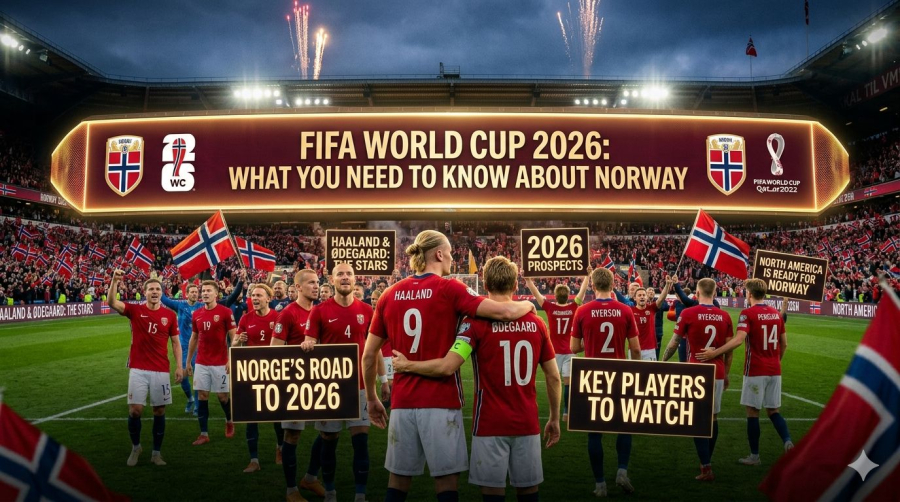
Norway’s appeal is straightforward for fans: the team blends a clear headline star in Erling Haaland with a creative leader in Martin Ødegaard, supported by a group of professionals developed in strong European leagues. When the structure clicks, Norway can look direct, dangerous, and hard to defend in transition.
Just as important, the campaign carries historical weight. Norway has not appeared at a men’s World Cup finals since 1998. That gap adds extra energy to every qualifier and gives the team a powerful “mission” narrative that can galvanize both players and supporters.
Norway at the World Cup: a quick history refresher
Norway’s World Cup pedigree is real, even if its appearances have been infrequent. Historically, Norway has shown it can compete with elite opponents on big stages.
- World Cup appearances: Norway has qualified for the men’s World Cup finals three times (1938, 1994, 1998).
- Best finish: Round of 16 (1998).
- Modern context: A long absence has increased the importance of building a sustainable talent pipeline and a consistent competitive identity.
The upside for 2026 is that Norway’s current generation features more globally recognized attacking talent than many previous cycles, which can be a difference-maker in tight qualification groups.
How World Cup 2026 qualification works for Norway (UEFA basics)
Norway qualifies through UEFA, where the process is traditionally intense due to the number of competitive teams. The exact group draw and match calendar are set by UEFA, but the broad structure is familiar to fans of European qualifying.
Key qualification concepts to know
- Group stage qualifying: Norway will play home-and-away matches against a set of European opponents.
- Automatic qualification: Typically reserved for top performers in each group (commonly group winners, depending on the cycle’s rules).
- Playoffs: Many cycles include playoff routes for teams that fall just short in their groups.
- Consistency matters: Dropping points against organized mid-tier sides can be costly, even if you can compete with top seeds.
For Norway, the practical goal is simple: collect points steadily, protect home results, and turn attacking quality into dependable scoring output across the full campaign.
Norway’s identity: what kind of football do they play?
Norway’s identity is shaped by a modern blend of physical presence, direct attacking intent, and the ability to transition quickly. While tactical approaches can vary by opponent and coach’s selection, the squad’s profile tends to support a few recurring themes.
Common strengths Norway can lean on
- Vertical threat: With an elite finisher, Norway can turn fewer chances into goals, especially when attacks move quickly from midfield into the penalty area.
- Creative leadership: A high-level playmaker can raise the ceiling of chance creation and set the tempo in possession.
- Set-piece potential: Taller, physical profiles can translate into meaningful set-piece danger when delivery is consistent.
- Counter-attacking punch: Norway can be especially dangerous when opponents commit numbers forward.
What tends to decide Norway’s biggest matches
- Chance volume: Turning control into sustained pressure is often the difference between a narrow win and a frustrating draw.
- Defensive organization: The ability to stay compact, defend the box, and avoid cheap transitions conceded can define qualification campaigns.
- Game management: Protecting leads, slowing opponents’ momentum, and handling hostile away environments are crucial in UEFA qualifying.
Key players: the faces of Norway’s 2026 push
Norway’s modern profile is amplified by recognizable names performing at the top end of club football. While no national team is only two players, Norway’s competitive ceiling is undeniably boosted by its leaders in attack and midfield.
Attacking headline: Erling Haaland
Erling Haaland gives Norway a rare advantage: a striker who can decide games with minimal margin for error. His presence changes how opponents defend, often forcing deeper lines, earlier doubling, and more cautious fullback play. For Norway, that attention can create space for runners, secondary scorers, and late arrivals from midfield.
Creative engine: Martin Ødegaard
Martin Ødegaard offers control, chance creation, and connective play that can help Norway sustain attacks rather than relying purely on fast breaks. His ability to find passing lanes, deliver final balls, and dictate tempo is the type of ingredient that turns talent into a coherent attacking plan.
The supporting cast matters
A World Cup qualification campaign is a long test of squad depth, availability, and adaptability. Norway’s best version is typically the one that gets meaningful contributions from:
- Wide players who can stretch the field and deliver accurate service.
- Midfield runners who arrive in the box to support the striker.
- Defenders who can win duels and start attacks cleanly under pressure.
- Goalkeeping reliability to secure points in tight away matches.
In qualifying, these “edge” contributions often determine whether a team finishes first, reaches playoffs, or narrowly misses out.
Why the expanded World Cup can be a real opportunity for Norway
The move to a 48-team World Cup changes the competitive landscape. It does not make UEFA qualifying easy, but it does reshape expectations and opportunity.
Potential benefits Norway can capitalize on
- More pathways to the finals: Expansion increases overall tournament access worldwide, reinforcing the idea that strong “next tier” European sides can push through with a consistent campaign.
- Momentum and belief: A team with star quality can build confidence quickly, and belief is a real asset in pressure qualifiers.
- Greater global spotlight: A successful qualification run elevates the profile of Norwegian football, supporting youth development, sponsorship interest, and fan growth.
- Recruitment and development benefits: Visibility can help emerging Norwegian players move into stronger club environments, accelerating development.
For fans, the upside is exciting: meaningful matches, a clear narrative, and a national team that can deliver highlight moments against any opponent.
What fans should watch for during the qualification run
If you want to follow Norway’s 2026 journey with a sharper eye, focus on a few practical indicators that correlate strongly with qualification success.
Match-to-match signals
- Home performance: Successful qualification campaigns usually start with making home matches feel non-negotiable.
- Results against comparable teams: Taking maximum points from opponents in the same tier is often the difference between first and second.
- Chance creation patterns: Are attacks producing consistent opportunities, or only isolated moments?
- Discipline and control: Avoiding red cards, unnecessary fouls, and late-game chaos can preserve critical points.
Squad continuity
International football rewards cohesion. Watch whether Norway can keep a stable core through the windows, especially across the spine of the team: goalkeeper, center backs, central midfield, and striker.
Norway’s World Cup 2026 outlook: reasons for optimism
Norway’s best-case scenario is compelling: a team with elite finishing, top-level creation, and enough structure to grind out results in tough UEFA away games. That combination is exactly what qualification campaigns demand.
Here is a clear snapshot of Norway’s 2026 case, framed in a way fans can track all season.
| Factor | What it means for Norway | Why it matters in qualifiers |
|---|---|---|
| Elite goal threat | A striker who can score against set defenses and in transition | Turns tight matches into wins, even with limited chances |
| High-end creativity | A playmaker who can unlock compact blocks | Helps avoid draws against well-organized opponents |
| Transition danger | Fast, direct attacks when space opens | Effective away from home when possession is harder to sustain |
| Set-piece upside | Potential to score and defend dead-ball situations | Often the deciding factor in evenly matched qualifiers |
| Campaign consistency | Staying organized, focused, and durable across windows | Qualification is a marathon, not a single performance |
What would a successful 2026 campaign look like?
Success can mean different things depending on the group and circumstances, but Norway’s positive benchmark is clear: remain in contention deep into the final qualifying window by stacking points early and avoiding avoidable slip-ups.
Practical milestones fans can track
- Strong start: Take early wins to reduce pressure later in the campaign.
- Control the “must-win” games: Beat teams Norway is expected to beat, home and away.
- Compete with top seeds: Even a draw against a higher-ranked opponent can swing a group.
- Finish with momentum: Late runs often define qualification stories.
If Norway hits these milestones, the team gives itself the best chance to convert talent and excitement into a spot at the biggest tournament in football.
Bottom line
Norway’s World Cup 2026 story is worth following closely because it combines genuine star quality with a clear national ambition: return to the World Cup stage. With Erling Haaland leading the line and Martin Ødegaard orchestrating play, Norway has the ingredients to create moments, win big matches, and build a qualification campaign that captures global attention.
The next steps are simple for fans: track the qualifiers, watch for consistency, and enjoy a Norwegian side that looks increasingly equipped to turn potential into a defining international breakthrough.
